What to Include in a Home Inventory: A Room-by-Room Guide to Everything Worth Documenting
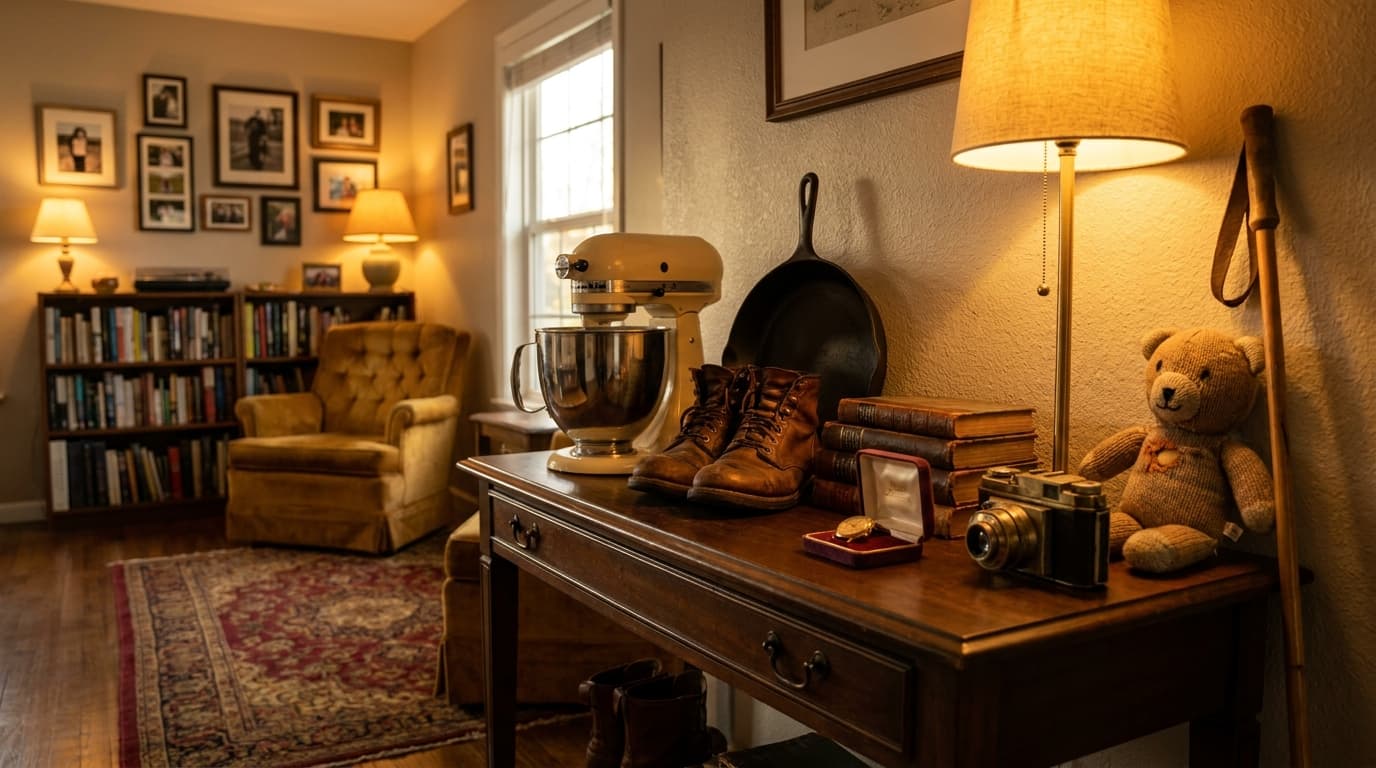
The short version: Most people hear "valuables" and think jewelry and electronics. But a valuable is really anything worth knowing about: where it is, what it'd cost to replace, what story it carries, what you need to do with it next. That $430 stand mixer. The $15,000 sitting in your closet. The vintage Griswold skillet in your cabinet that sells for $300 on the collector market. This guide covers every category worth documenting, room by room, with real dollar figures.
Why most people inventory the wrong things#
When people try a home inventory, they almost always start in the same place: jewelry, laptops, the TV. Maybe some furniture. Then they close the notebook and figure they're done.
Insurance claim data tells a completely different story.
A tornado destroyed a family's home in Missouri in 2025. When they filed their claim, the adjuster listed their Kate Spade purse as a "red leather pouch," erasing the brand and cutting the reimbursement in half. Their underwear and bras were weighed in a plastic bag and valued at $70 total. Build-A-Bear stuffed animals, each worth $25-40, were priced as $5 "Kohl's Cares" plush. The insurer capped all children's toys at $100 for a household with one child. Items less than four years old got 70% depreciation.
The items that cost this family the most weren't the obvious ones. They were hundreds of everyday things nobody thought to write down.
That case gets at something most inventory guides miss: the word "valuable" is doing more work than people realize. It doesn't just mean expensive. It means worth knowing about. That's a much wider range of things than jewelry and electronics.
Here's a useful way to think about what to include:
Replaceable items are things you'd need to buy again after a loss. Kitchen appliances, clothing, tools, children's gear, linens. The replacement cost adds up faster than anyone expects.
Irreplaceable items carry sentimental, inherited, or one-of-a-kind value. Family heirlooms, photographs, signed artwork, vintage collections. If you lose the record, the story goes with it.
Findable items matter because you need to know where they are. Seasonal gear, warranties, items in storage, maintenance records. Their value is not having to search three closets for your ski boots in December.
Most inventory guides only address the first category, and only through the lens of insurance. The second and third matter just as much for daily life.
Room by room: what to document#
Kitchen#

The room most people skip. Insurance experts consistently flag kitchenware as the most overlooked category in home inventories.
Look at the numbers. A KitchenAid Artisan stand mixer is about $430. A Breville Barista Express espresso machine, roughly $750. A Le Creuset Signature Dutch oven, around $420. A Vitamix Professional Series blender, $630. A new Lodge cast iron skillet is only $35 — but a vintage Griswold or Wagner from the mid-20th century, the kind sitting unnoticed in plenty of cabinets, regularly sells for $100 to $500 on eBay and collector marketplaces. Insurers pay replacement cost, and for a discontinued collectible, that is the market price. Document it.
Add large appliances, cookware, dishes, glassware, cutlery, and small electronics, and most kitchens hold $3,000 to $8,000 in replaceable items. Many hold considerably more. None of this shows up in the typical "jewelry, electronics, furniture" inventory.
And beyond insurance, there's a more mundane reason to know what's in your kitchen: not buying a duplicate garlic press because you forgot you already own one.
Bedrooms and closets#
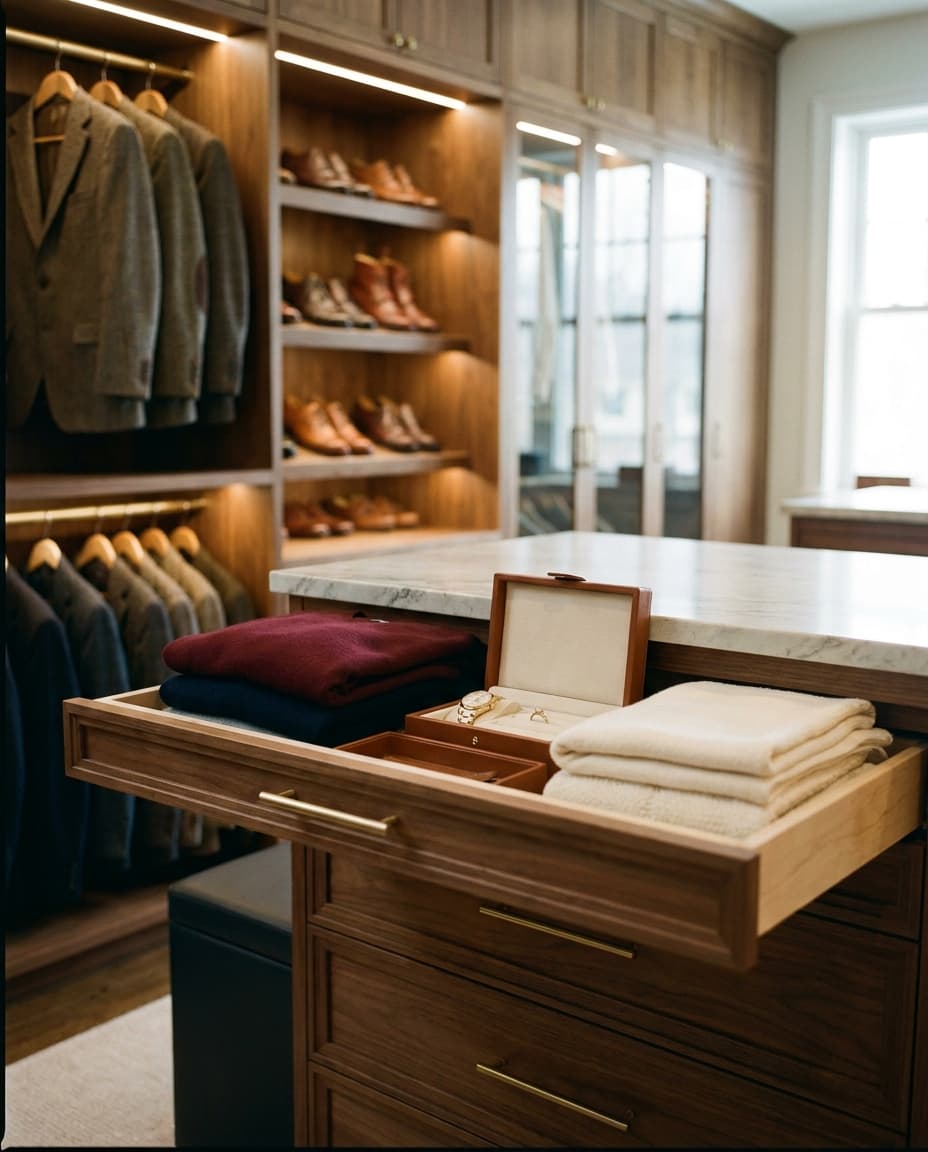
A renter on r/personalfinance put it bluntly: "Also remember clothes, everyone forgets clothes when it comes to insurance."
Industry data puts the average household wardrobe at roughly $15,000 replacement cost. Some estimates run higher. Even a modest closet, once you count work clothes, outerwear, shoes, and seasonal items, is several thousand dollars.
Clothing is just the start. Jewelry, watches, bedding sets, personal electronics on nightstands, that box of keepsakes in the back of the closet. Bedrooms are where sentimental and financial value overlap the most: the engagement ring, the watch you inherited, the baby blanket folded in a drawer.
Open the drawers. Document this room carefully.
Living room and family room#

Furniture, television, speakers, gaming consoles, streaming devices, decorative items, lamps, rugs, books, media. Electronics are usually the highest replacement cost by room. A PlayStation 5, a 65-inch TV, a soundbar, and a laptop add up to $2,000-4,000 before you touch anything else.
Furniture is easy to undercount. A quality couch costs $1,500-3,000. A rug can be $500-2,000. End tables, bookshelves, media consoles. None of them are glamorous enough to come to mind during an inventory session, which is exactly why they get missed.
Home office#

Computers, monitors, keyboards, mice, headphones, webcams, desk furniture, printers, supplies. This room matters for a reason beyond dollar value: serial numbers. Your laptop's serial number is what police use for theft recovery and what the manufacturer needs for warranty claims.
If you work from home, your office probably holds $3,000-8,000 in equipment. Write down the serial numbers. Photograph the labels. That ten minutes could save you weeks of dealing with a manufacturer's support team later.
Garage, basement, and attic#
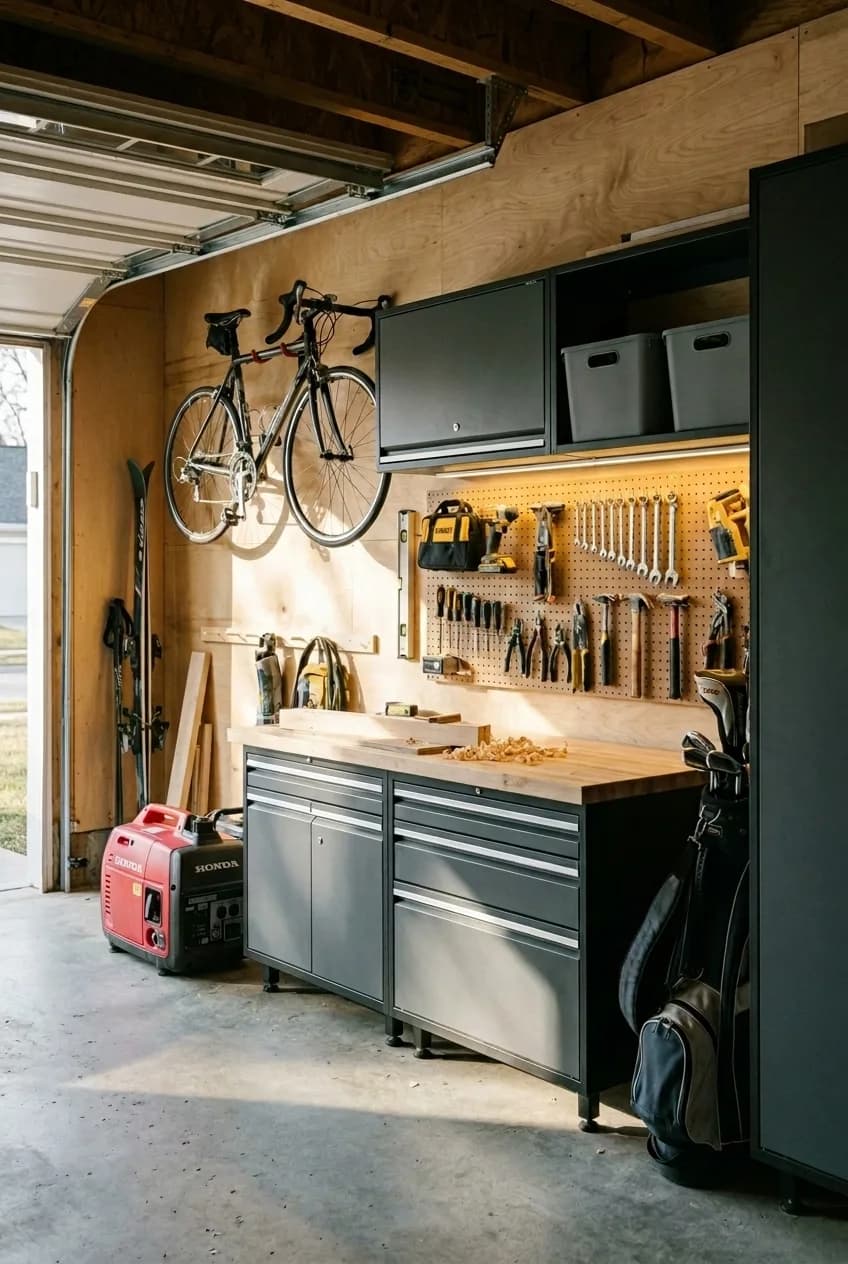
The black hole. Things go in. Nobody quite remembers what's there.
Power tools and lawn equipment are the second most overlooked category in home inventories. A DeWalt drill kit is around $350. A Honda portable generator, about $1,150. Lawn mowers, snow blowers, and garden equipment can add another $1,000-3,000. Then there's sporting goods: bicycles (road bikes run $1,000-10,000), golf clubs, ski equipment, camping gear.
And then everything else in storage. Holiday decorations. Seasonal clothing. Boxes from the last move that never got unpacked. A garage or basement can easily hold $5,000-15,000 worth of stuff, and it's the room least likely to be inventoried because people genuinely don't remember what's in there.
You probably own things in your garage right now that you'd buy a second copy of because you have no idea where the first one went.
Children's rooms#
Toys, clothing, books, electronics, sports equipment, baby gear. Each item might not seem worth documenting on its own. Together, a child's room is $2,000-5,000 or more.
The Missouri tornado case is a good example of why this matters. The insurer capped all children's toys at $100 total. One child. Build-A-Bear animals, custom toys, a room full of accumulated gifts. Without documentation proving what those toys actually were, the family had no way to challenge a $100 payout on a category worth many times that.
Everything else#
Bathrooms (toiletries, small appliances, linens), outdoor spaces (patio furniture, grill, garden tools, play equipment), miscellaneous storage. These are the "add it all up" categories. Mundane individually, real money collectively. Replacing every towel, toiletry, cleaning product, and bathroom fixture in a home typically runs $500-1,500.
What people discover when they actually do it#
Three things tend to happen when someone sits down and documents what they own.
The total is bigger than they thought#
People add up their kitchen, their closet, their garage, and the number shocks them. A standard two-bedroom home holds roughly $70,000 in personal property at replacement cost. Larger homes, $100,000 to $150,000 or more. Most people, asked to guess, come in way under that.
One App Store reviewer said it simply: "In using this app, I've realized that I greatly underestimated the value of my belongings." That realization matters practically, not just emotionally. It means checking your insurance coverage, because the gap between what you own and what your policy covers might be wider than you think. Standard homeowners policies cover personal property at 50-70% of your dwelling coverage. For a $400,000 home, that's $200,000-280,000 in contents coverage. Sounds like a lot. It may not be, once you actually count.
They find things with stories#
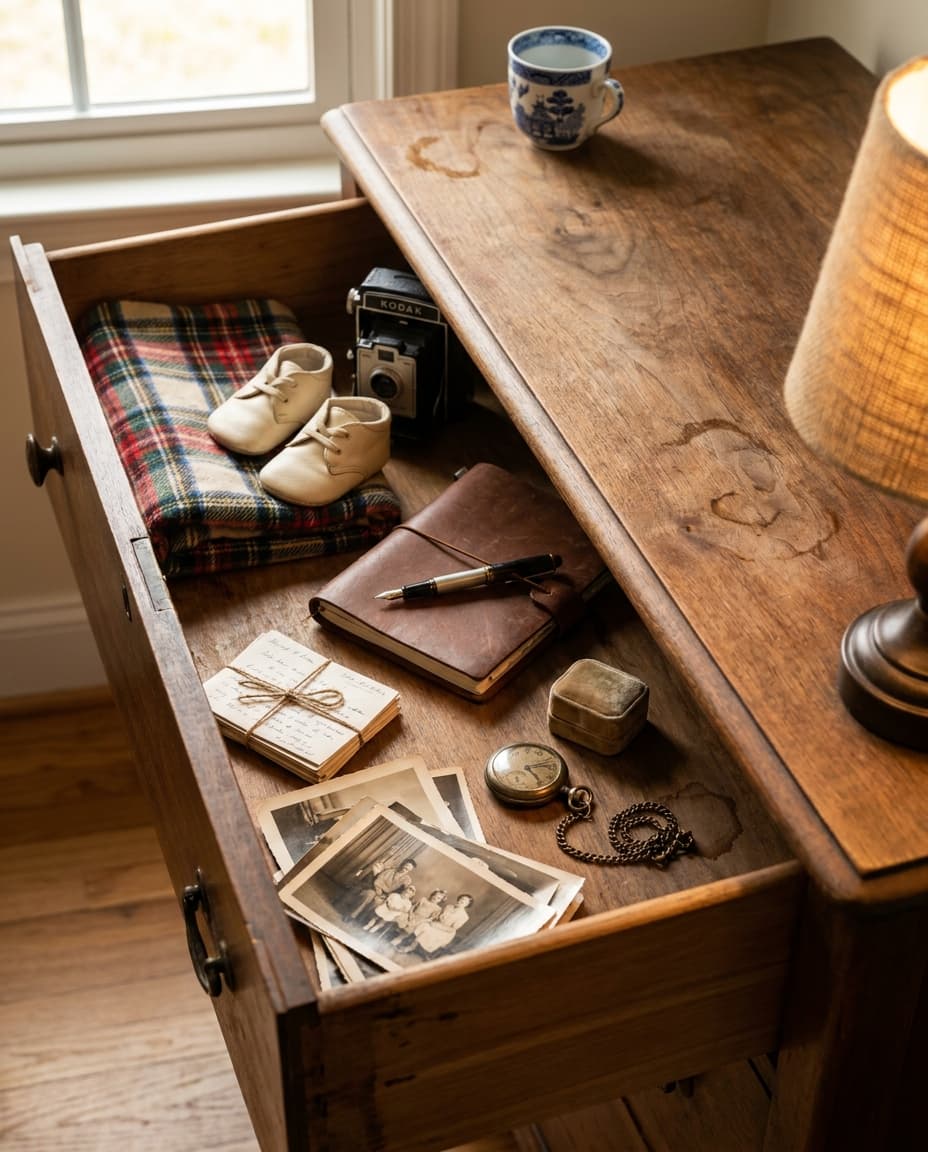
An estate professional on Reddit's r/declutter described what she sees regularly: "I have found people thousands and thousands and thousands of dollars in their estates when they thought there was nothing there."
Estates aren't just emotional weight. They contain undiscovered financial value that gets thrown away without documentation. A cast iron skillet turns out to be a vintage Griswold worth $300. A framed print turns out to be a signed limited edition, not a poster. A guitar in the back of a closet is a 1970s model worth more than anyone guessed.
Documenting irreplaceable items isn't about insurance. It's about preserving context: who owned this, where it came from, what it means, who should get it next.
They stop re-buying things they already own#
"My family has 23 iPhone cords. Why? Because we can't ever find anything and we re-buy!" That review, from an Everspruce App Store user, nails it.
Once you can see what you own and where it is, your behavior changes. You stop buying duplicates. You find seasonal items without tearing apart a closet. Knowing where the camping gear is saves more time in a given year than filing an insurance claim (hopefully) ever will.
How to actually start#
The worst approach is trying to do everything at once. A full-house inventory sounds like a weekend project, which means it never starts.
Pick the room that surprised you most reading this. The kitchen, maybe, or the closet. Document one room completely. That's thirty minutes, not a weekend. It builds momentum for the next one.
The common advice is to walk through your home with your phone and take a video. That's a reasonable starting point, but it's a floor, not a ceiling. Video shows you owned something. It doesn't give you structured data you can search, filter by room, or hand to an insurer in a format they'll actually process.
Home inventory apps close that gap. Sortly and Itemlist both offer solid room-and-location organization with photos. Val: The Valuables App adds AI-assisted capture that identifies items from photos and estimates replacement values, which cuts the manual entry significantly. Any structured approach beats video alone.
If you have ADHD or struggle with the overwhelm of getting started, the 10-Minute Inventory Starter from our ADHD and Home Organization guide breaks the task into the smallest possible first step.
Frequently asked questions#
Do I need to inventory cheap items?#
Yes. The Missouri family's biggest losses weren't the expensive items they remembered to list. They were hundreds of everyday things, each worth $20 to $100, that collectively totaled thousands. Two hundred items at $50 each is $10,000. Inexpensive items are only inexpensive one at a time.
How often should I update my home inventory?#
After major purchases, after a move, and at least once a year. The practical test: if you brought something new into the house and it'd cost more than you'd want to replace out of pocket, add it. The best inventory system is one you'll actually maintain.
Is a home inventory only for insurance?#
No. Insurance is the most dramatic use case, but most of the value is more ordinary. Finding things without opening every closet. Not re-buying stuff you already own. Tracking warranties. Preparing for a move. Knowing what to pass on to family. The people who get the most out of their inventory use it to retrieve things and quiet the mental noise of keeping track of a household, not to file claims.
This article draws on public insurance claim data, consumer advocacy resources from United Policyholders, guidance from the Insurance Information Institute, NAIC consumer resources, and real experiences shared in online communities including r/Insurance, r/personalfinance, and r/declutter. Val: The Valuables App is a home inventory product built by Wishabit, LLC. We build this software and also write about the category honestly, including recommending competitor products where they serve users well.